Showing posts with label PWWCBA 2012. Show all posts

Thursday, September 27, 2012

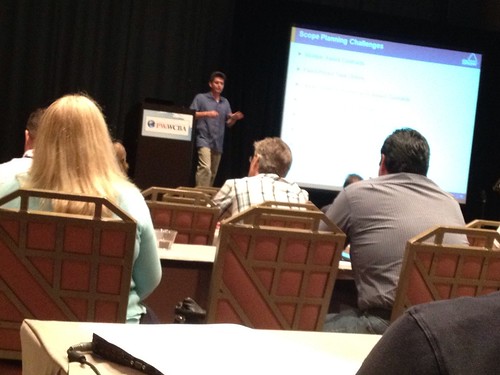
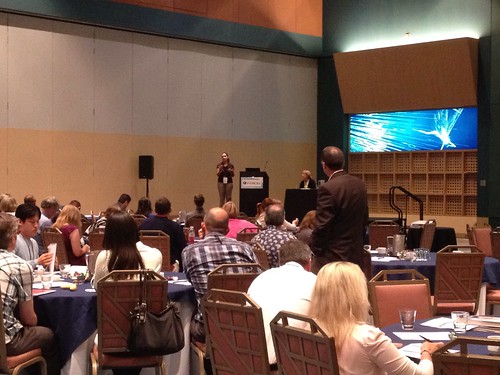
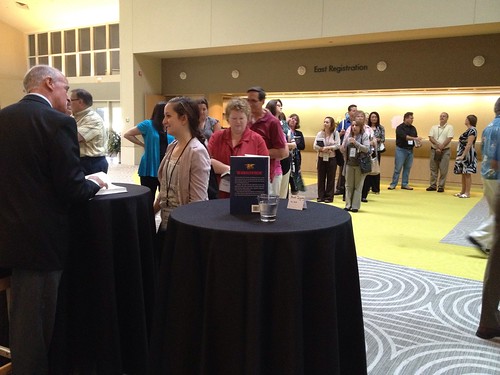
PWWCBA 2012 in Photos

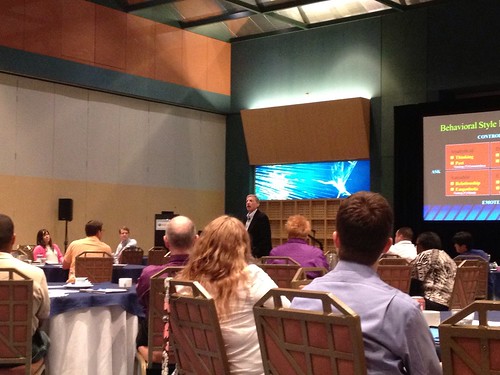
From paying a brief visit to Epcot Center, to book signings and networking galore PW&WCBA 2012 was a whirlwind of learning, inspiration and making new connections. From big picture ideas to project-specific case studies, our three days in Florida ran the PM & BA gamut.

Check out our photos for a glimpse of the action:


We'll be publishing insights from attendees of this year's PW&WCBA event over the next several weeks. Would you like to share your thoughts? Email them to Michelle LeBlanc at mleblanc@iirusa.com.

Wednesday, September 19, 2012

It's Your Career, Drive It Like You Stole It

We'll be publishing insights from attendees of this year's PW&WCBA event over the next several weeks. Would you like to share your thoughts? Email them to Michelle LeBlanc at mleblanc@iirusa.com.

Chuck Millhollan, It is your Career, Drive It Like You Stole It written by Demetrios Plessias

Chuck Millhollan spoke about how to lead your career to a better today and future. He compared a used broken down car idling by versus a muscle car as what your career could be compared to by others. He stated how it is important not to get led off the path of your career. He provided the following insight as food for thought.

- Know what your worth.
- Know your next position and plan for it.
- If you were going to show off your career, what would you show?

Statistics were given that 9% of jobs are found on-line while 75% of jobs are found due to networking. Chuck expressed the importance on not being invisible and to take advantage of social media sites and networking events. He expressed that your network is only as good as what you put into it. Your career is a large part of your self-worth therefore it should be maintained through knowledge sharing, obtaining certifications/licenses as well as keeping up with the latest innovations.

To add my personal thought to this session, I really enjoyed this session since Chuck made it interactive for all but the most I got out of it was that Chuck made me realize that one should not lose track on the development of their career even though it is very easy to be bumped off track. I have now developed a plan that would give my career the upgrade that it deserves. Thanks Chuck for the jump start.

Demetrios Plessias is a project manager for WSP Flack + Kurtz which is a consulting Engineering firm in NYC. He can be reached at demetrios.plessias@wspfk.com

Monday, September 17, 2012

New Frontiers in PM: Creating High Performing Team

We'll be publishing insights from attendees of this year's PW&WCBA event over the next several weeks. Would you like to share your thoughts? Email them to Michelle LeBlanc at mleblanc@iirusa.com.

Silvanus David provided a South African view on how to create a high performing team. The video shown of the cheetah, gazelle and the project manager is a unique way to indicate how important a project manager needs to be prepared for everyday challenges and possible risks.

As a professional in his field, to create a high performing team the following are a few items that are needed:
- Know your teams strength and weakness
- Team building
- develop as a single unit by knowledge sharing
- Treat team members as people and not as a resource object

Silvanus David discussed that demonstrating leadership within a team shows character. Being proactive not reactive are traits of a true leader. Leadership is earned and not bestowed. Believe in the capabilities of the team and increase their weakness. A high performing team creates value which leads to innovation. Give praise to the team by taking time out to acknowledge their effort and support.

As a follow up to this conference session, I went back to the office with a renewed vigor to sit with my team members, re-enforce team sharing as well as develop new ways to continue the development of my team with some of the ideas that Silvanus and I discussed. Thanks Silvanus for your professionalism and ideas.

Demetrios Plessias is a project manager for WSP Flack + Kurtz which is a consulting Engineering firm in NYC. He can be reached at demetrios.plessias@wspfk.com

Wednesday, September 12, 2012

Virtual Tool Time at #PWWCBA

The final afternoon at PW&WCBA allowed us to fill up our PM & BA toolboxes with some new ideas.

James Franklin, P.E., PMP, Project Manager, Shaw Environmental & Infrastructure gave several examples of PM uses for mind mapping, including building a presentation or PMP study guide.A mind map is a diagram, used to represent word or ideas graphically and can be used for improving brainstorming, collaboration or creating content. By creating these documents using mind mapping software teams can improve collaboration and prevent the rework of having to manually create diagrams or documents.
Mind mapping
In "Realizing the Full Potential of the Virtual Team" we learned that a higher level of early organization is correlated to a direct positive impact on the team's productivity, quality & interaction.  In addition to this, in a virtual team you need to be explicit and transparent throughout the project, providing self-service information that is available at all times.

Anyone can be trained to work virtually, but it involves a different skill set than co-located teams (an ability to ask questions and clarify and work independently, amongst others). Communication skills can pose a challenge on any team, but in a virtual team the problem can be exacerbated as modes of communication are removed and communication is often not real-time.

Lindsay Chamberlain suggests several tools for better managing a virtual team:
- Create a team charter that includes information such as expected review/lag times,  scheduling conflicts
- A workload and priorities log to track
- Virtual meeting technologies that prevent confusing conference calls (however, using computer-mediated communication every single time will lower effectiveness, aim for 10% or more person-to-person communication using face-to-face, webcam, or voice-to-voice)
- Regular communication of the vision and goals
- Determine training needs and comfort with virtual environments as soon as possible (first month)
- Open conversations about the virtual environment
- Avoid unintentionally privileging co-located team members

Lastly, Maryann Burns, Senior Project Director, The Travelers Companies, Inc asked "Are your PM Tools Keeping up with the Latest Innovations, Trends and Techniques?" Saying, to know what tool you need, you need to first look at what your purpose is (both today and for the future).  First conduct a current tools assessment and report findings, then design guideposts and develop a road map for implementation.


 Michelle LeBlanc is a Social Media Strategist at IIR USA and the voice behind the @Project_World twitter. She may be reached at mleblanc@iirusa.com 

#PWWCBA Live: Complex Projects

Our second two keynote sessions of the morning were Jim Durkin, SVP, WTC Transportation Hub, Tishman Construction Corporation and Connie Steward, SVP Human Resources & Organizational Development and Lysa Ratliff, Senior Director Cause Marketing and Partner Communications of Habitat for Humanity International.

Jim Durkin spoke on managing complexity and pointed out that complex project teams need to be able to manage: uncertainty, complexity, dynamic interfaces, significant external influences, extra risks that are difficult to quantify, on the spot decision making, prevention of scope creep and more.

In the WTC project (which is actually 8 separate projects) all of these come into play. The organization needs to track literally every piece of steel used from the time it is fabricated and meet various external milestones. The WTC Transportation Hub had to deal with bidding out materials around the world, managing 40 contractors and unions and planning to accommodate over 100,000 passengers per day in the final structure. External influences also created need for various changes, which the project team stays on top of with constant, daily communication: a design change not coming in on time could hold up over 1,000 people working in the field.

Habitat for Humanity Session
Connie Steward and Lysa Ratliff spoke about developing leaders for complex projects. Boundaries of race, culture, gender and more are challenges on Habitat for Humanity projects, build teams may not share a similar language, but these are not the boundaries that are the hardest for leaders in the organization, rather it often comes down to loyalty, respect and trust.

To be a successful leader, focus on processes, relationships & results. Having a common goal, trust and shared accountability will leave you ahead of the game.

Ratliff discussed the shift from managing a project to leading a project and shared the following lessons:
Create the culture first, build an environment of trust.
Get over yourself, it's about others.
Plan for contingencies, but learn to adapt and problem solve.
Focus on details, but don't get lost in them.

Michelle LeBlanc is a Social Media Strategist at IIR USA and the voice behind the @Project_World twitter. She may be reached at mleblanc@iirusa.com 


#PWWCBA Live: "Race Pace" and Collaboration

Don Mann, Former Member, Seal Team Six started off our final morning at PW&WCBA with some insights from his time with Seal Team Six and as a competitive athlete.

Untitled
Don Mann signing books at PW&WCBA

Here are some of my key takeaways that can apply to the project management and business analysis world:

- be the quiet professional
- when a new member joins the team, your job is to train him to take over for you when you leave
- be confident and competent, but you won't be an expert in everything. Rely on subject matter experts
- Break macro goals up into micro goals
- Step out of your comfort zone and "train at race pace" (give it all you've got at all times)

Up next, Fredrick Redd, PMP, Director, Project Management Office, Port Authority and New Jersey Transit talked to us about "Developing & Leading an Innovative Approach to Creative, Forward-Looking Collaboration." Port Authority and New Jersey Transitis currently at a crossroads, having been in existence since 1875, there is a need for more collaboration and ultimately innovation. Organizational silos, a culture that is resistant to change and communication issues stand in the way of this. Four primary improvements challenged these silos for better collaboration:

- Public Private Partnerships
   - Reduces delays by increasing efficiency
   - Risks are weighed during all phases for better management
- Integrated Capital Management System
   - Integrate stand alone systems for better transparency of data
   - Standardize process and simplify access to data
- Net Point Scheduling Software
  - Allows intuitive view of project schedule
- BIM 4D Modeling Software
  - Used to model projects such as the World Trade Center Transportation hub, this allows the team to visualize conflicts, design changes and more.

By better communication of vision and strategy and measurement of benefits and lessons learned through these programs, the organization is continuing to break down silos and is more open to new ideas. More than the technical innovations, this transformation has also come from more "soft skills" approaches: using cross-functional teams and a stage gate process PMO.

Michelle LeBlanc is a Social Media Strategist at IIR USA and the voice behind the @Project_World twitter. She may be reached at mleblanc@iirusa.com


Tuesday, September 11, 2012

#PWWCBA live: The biggest challenge to decision making? Risk.

Untitled
Michael Thorn started his afternoon session at ProjectWorld discussing whole body decisions, which is to say, the following three inputs on which we base decisions:

Brain = Rational logic
Heart = Passion
Gut = Intuition (Lack of data and/or time)

Passionate, "heart" decisions may make us feel the best, but "brain" based decisions are the easiest to back up. Data analysis, mainly performed by lower level employees, is what is going to drive many professional decisions, but ultimately it may be upper level management who reviews the results and determines success.

Here are my key takeaways:

Decision making is what all workers do, and what steers what the organization does.
Most organizations are good at doing analysis and investigation, but struggle with the "pivot point" of actually making a decision.


Ultimate criterion: does the decision create a positive outcome for the person and/or organization?

For effective decision making: consider alternate approaches and scenarios, assign (or accept) accountability for decisions, and communicate, communicate, communicate.

You can follow the 40-80 rule when timing is important: you need at least 40% off the data, but don't need to wait for all data to be available, make a decision with 80% of the data.

The biggest challenge to decision making? Risk. 
Risk management can help with this:
Identify what could go wrong, assign a probability of occurrence, and then determine the qualitative or quantitative impact. Mitigation  of these impacts is where you start making decisions. Knowing you have an ability to compensate for these risks (such as a project management contingency fund) may lead to more willingness to take risks.
Risk management is not a tool, it is a process of identification, analysis, control & measurement of outcomes that has to be carried out throughout the project to the very end.
Focus on the drivers & critical factors
Nothing replaces project knowledge and nothing replaces your judgement

Michelle LeBlanc is a Social Media Strategist at IIR USA and the voice behind the @Project_World twitter. She may be reached at mleblanc@iirusa.com


#PWWCBA Live: Tools, Techniques & Trends


Six Sigma in Software Development
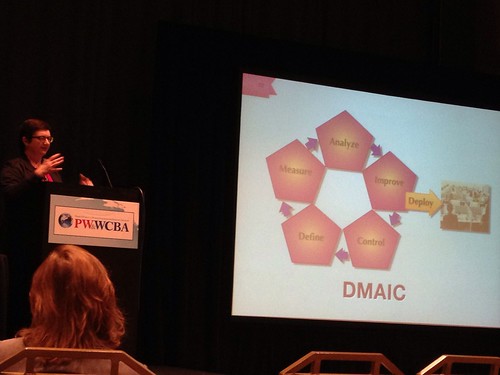
I started the first afternoon of track sessions at ProjectWorld in "Six Sigma and the Software Development Life Cycle – a Match Made in Heaven, Maybe." Speaker Rebecca Burgess started off by defining the SDLC and then pointing out it's weaknesses (often tactical, short-term, poor requirements definition and may end with deployment) and then showing ways that Six Sigma can help fill this shortcomings.

Six Sigma for the Software Development Life Cycle is looking to accomplish "Strategic Success" - actual long term, implemented change. To do this, one should begin by documenting the default success criteria, gathering requirements from various sources (the voice of the customer, voice of the data, voice of the business & IT and looking at best practices from outside the company), performing comparative analysis and controlling business processes (using SIPOC & Swimlanes for example).

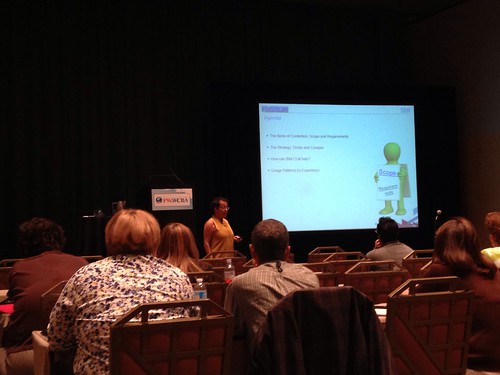
Up next was "Divide and Conquer: Bridging the Gap Between Scope and Requirements Managements with CLM Tools" with Cherifa Mansoura, PhD, Solution Architect, IBM
Bridging the gap between scope & requirements

Mansoura started the session by asking, are scope and requirements the same? Scope is the work that needs to be accomplished on the project (the product scope is the set of features that need to be developed on a product). Requirements are either derived from user needs or stated in a document such as a contract or standard specifications. The scope elements are NOT ONLY the requirements.

Every project must establish it's scope: what's in, what's out. Think of your scope as a box that contains both your requirements and other elements (change requests, risk, etc.) The container manages all of the work items inside the box.

Still to come this afternoon is our book signing with Ellen Gottesdiener and another track after the break.

Michelle LeBlanc is a Social Media Strategist at IIR USA and the voice behind the @Project_World twitter. She may be reached at mleblanc@iirusa.com


Live at #PWWCBA: Manipulate Your Way To Collaborative Culture

Harvey A Robbins
Harvey A. Robbins started us off at the first main conference day with three ways to develop a collaborative culture:
1. Select members of your team who have a natural tendency towards sharing information without the expectation of reciprocity
2. Teamwork and establishing clear expectations: Setting up goals, dividing up roles & holding people accountable
3. Manipulation: Use knowledge of personalities to build a team that works together
  • "Drivers" - outcome driven, process oriented, feedback rich. Good to delegate to and task oriented. Want to hear the 'what?"
  • "Expressives" - Creative, good for new product development. Want to hear the "why?"
  • "Analyticals" - Will keep you from making mistakes by tracking information and details. Want to know the "How?"
  • "Amiables" - People and friendship related, collaboration and communication focused. Want to know the "who?"
The question that Robbins recommends all managers keep in mind is "Who is responsible for what, by when, and how will we check with each other that we're on track?" When you are communicating with all personalities ("Broadcast versatility") you can speak to all potential readers by answer all questions and providing information on past events, future focus, details and the people that will be effected.

Michelle LeBlanc is a Social Media Strategist at IIR USA and the voice behind the @Project_World twitter. She may be reached at mleblanc@iirusa.com


Monday, September 10, 2012

An Agile Afternoon at #PWWCBA

The first afternoon at ProjectWorld and The World Congress For Business Analysts featured two summits, Innovation in the PMO: What's Next? and Transitioning Practices for Agile Delivery.

Here are some of my key takeaways from "Agile: The Kanban Way" with Gil Irizarry, Program Manager:
Untitled

To implement Kanban for knowledge workers: start with what you do now, agree to pursue incremental evolutionary change (NOT "revolutionary change") & respect your current process

Kanban is about optimizing the whole & driving waste out of the organization, not necessarily specific activities. To implement, start by visualizing the workflow, limit your WIP & make your process policies explicit: improve collaboratively.

"Whatever you do, ask why?" - In doing this, you can identify your inefficiencies at each step along the way.

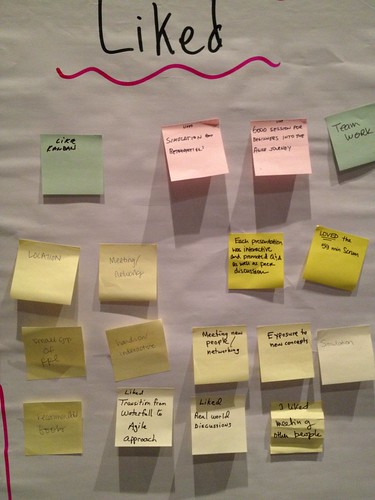
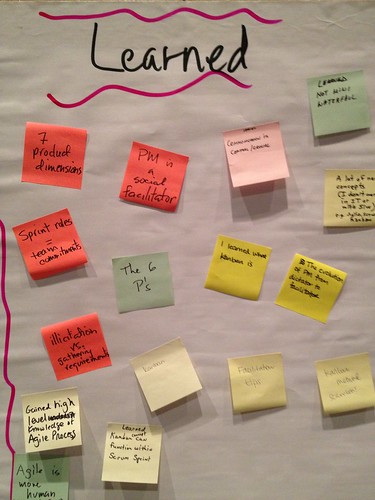
From Retrospective: Interactive Session, I'll let our attendees speak for themselves:
Attendees liked:

Untitled
Teamwork & interactive presentations
Real-world Examples
Meeting each other

Attendees learned:
 Untitled

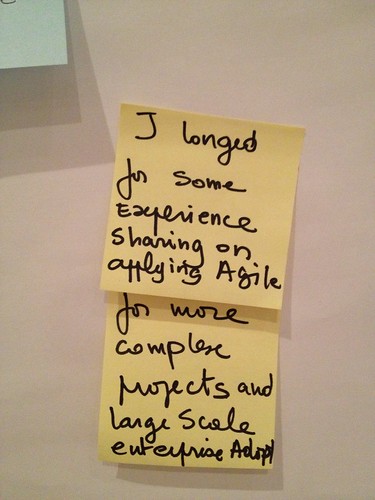
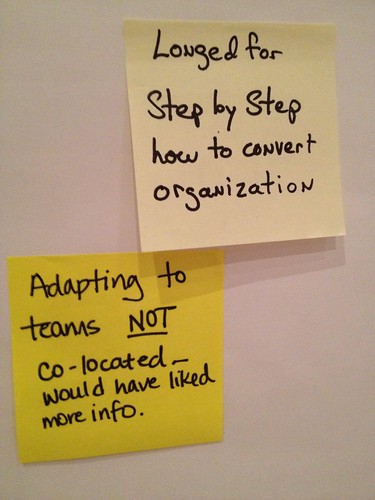
and attendees longed for:
 Untitled Untitled
 Not everyone was able to make it to the retrospective, what did you like, long for, or learn today?

Michelle LeBlanc is a Social Media Strategist at IIR USA and the voice behind the @Project_World twitter. She may be reached at mleblanc@iirusa.com

#PWWCBA Live: Building Risk Management Excellence

Joe Lukas kicking it off at PW&WCBA 2012

"You have risk all around you. Risk can be good or bad." - Joseph Lukas, PMP, PE, CCE, Vice President, PMCentersUSA started our workshop at PW&WCBA this morning by discussing the nature of risk. What do creating "New Coke," driving a car, and investing capital have in common? All of these activities carry risk...or uncertainty.

Lukas pointed out that risks are not always bad, they can also be opportunities. Risk management can contain both planning for adverse effects, but it can also be a way to plan for positive opportunities. Start thinking of it not as "risk management" but "uncertainty management."

Why do risk management?
- Technology, personnel or even project requirements may change over time, and the likelihood of change increases the longer the duration of the project
- Risk management can help you be prepared for these changes

So what are some ways to identify risks?
Brainstorm with the team: you can even ask "what could make this project fail?"
Checklists based on prior projects (in addition to "scanning the horizon" for new risks)
Describe the risk in 3 parts: causes, risk events & impacts

Once you've identified risk causes, events and impacts you can then assign each risk a probability of occurring and an impact value. There may be some risks that you choose to ignore, knowing that the impact or likelihood will be low, there may be others with a high probability that you can plan for. The probability and impact values will be subjective depending on what the project is, and can be determined by the member of the project team with expertise in that area.

Attendees of the workshop today went through a case study example using these tools to identify risks and create rankings of most important risks, each group found 6 or more risks for the project in question (the actual case study project team had identified 85 potential risks in their process!) Risks identified included everything from weather to difficulty or delays in obtaining permits to interpersonal conflicts or lack of buy-in from key individuals. You can do this for any project at home by brainstorming risks on your own project (identifying the cause, event and impact for each) and then assigning each a probability and impact value. Based on this you can rank the top risks from most to least likely.

Once you're aware of your risks and their probabilities/impact values, you can make your risk management plan.
Three techniques for risk response are:
Avoidance: eliminate the threat by eliminating the cause
Transfer & Share: reduce impact by sharing costs with an outside partner or share risks by contracting out
Mitigation: Reduce the probability to reduce the risk - take action to change the likelihood of a risk happening
Acceptance: (Active & Passive) Either have a plan in place for if a risk occurs, or passively accepting it when it occurs

Michelle LeBlanc is a Social Media Strategist at IIR USA and the voice behind the @Project_World twitter. She may be reached at mleblanc@iirusa.com

Thursday, August 30, 2012

Project World on PMChat radio

I've written here before about participating in the weekly twitter chat #pmchat, and we were pleased to recently participate in their one year anniversary celebration the #PMChat Olympics. In case you missed it, you can catch me talking about the 2012 event and some of our exciting speakers on the on-demand radio show here:


Listen to internet radio with KellyProjectSolutions on Blog Talk Radio

The free PW&WCBA pass has now been given away, but you can still save 20% off the cost of the event. Check out the details on the PMChat blog here. I hope to see some of the #PMChat community at the event!

For more information on the ProjectWorld & World Congress for Business Analysts and to register, visit our webpage.

Michelle LeBlanc is a Social Media Strategist at IIR USA and the voice behind the @Project_World twitter. She may be reached at mleblanc@iirusa.com

Thursday, August 23, 2012

Power Up Your Agile Product Planning & Analysis

Did you miss our recent webinar "Power Up Your Agile Product Planning & Analysis: Collaborate to Deliver Value" presented by Ellen Gottesdiener, Founder, Principal Consultant, EBG Consulting, Inc.?

A recording of the session is available for your viewing here, be sure to check it out for insight into the "7 Product Dimension" and how they both transcend and deepen stories and personas.

Looking to learn more on this topic? Ellen Gottesdiener and co-author with Mary Gorman will soon be releasing their new book Discover to Deliver: Agile Product Planning & Analysis, sign up here to be notified when it is released.We're looking forward to picking up a copy at our ProjectWorld book store this September!

Ellen will also be presenting one of our workshops "Agile Essentials: People, Planning, and Product Practices" as well as our half day Agile Summit on Monday September 10th at ProjectWorld & World Congress for Business Analysts 2012. You must register for the pre-conference workshops to attend, make sure to reserve your spot now.

As a reader of our blog, you can receive 15% off the standard registration rate with Priority Code PW12BLOG. For more information on the ProjectWorld & World Congress for Business Analysts and to register, visit our webpage.

Thursday, August 16, 2012

One Month Until PW&WCBA: Six Tips For The Attendee

If there is one thing we know about our Project World and World Congress for Business Analysts attendees, it's that they are planners, be it by nature or simply experience of the profession.

With that in mind, if you're planning to attend this September, you may already be tracking down the little details. Here are some tips for making the most of your experience at the upcoming conference:

1. Arrival: If you're arriving by air at Orlando International Airport, Disney's Magical Express Service is the easiest choice for reaching our event venue at Disney's Contemporary Resort at Walt Disney World Resort.

This exclusive complimentary shuttle and luggage delivery service conveniently takes you from the airport directly to your Disney Resort and back again when it's time to return. To book, call 407-827-6777 or visit www.DisneyConventionEars.com/dme for more information. It is recommended that you book this service now if you haven't already.

For those who choose to drive or take a cab, the street address of the resort is 4600 North World Drive, Disney's Contemporary Resort, Lake Buena Vista, FL 32830. There is also free transportation within the parks once you've reached the resort, including the Monorail, boats and motor coaches. Magic Kingdom® Park is also a short walk away.  

2. Accommodations: For questions regarding Disney's Contemporary Resort you may contact them directly at (407) 934-763, mention that you are with the "IIR ProjectWorld Conference" group. Disney's Contemporary Convention Center is adjacent to the Resort, with entrances both near the hotel registration desk, and at the rear near the garden wing annex and pool. This is where all PW&WCBA sessions will be held, just look for the PW&WCBA signage when you arrive!

3. Connect: Our exclusive crowdvine networking site is the place online for all your PW&WCBA information - here you will access documentation from session as well as information on collecting PDUs. Additionally, you can use the site to connect with fellow attendees and network before, during and after the event.

4. Dining: Lunch and a light breakfast will be served during the event, and there are also several dining locations on site at The Contemporary. Dining Locations at Disney's Contemporary Resort include:
California Grill – Award-winning restaurant with market-inspired menu, stage kitchen and spectacular views
The Wave – Casual dining featuring American cooking blended with world flavors
Chef Mickey's – Serving breakfast, lunch and dinner
Food 'N Fun Center – Hot & cold sandwiches, salads and desserts
The Downtown Disney® area, available via free shuttles from the hotel, also offers several dining options.

5. Dress: We would like to create an informal atmosphere at the conference conducive to learning and networking- business casual dress is welcome. The main guideline is for you to wear what you feel most comfortable in.
With each attendee having their own ‘ideal’ temperature for conference rooms, it is not always possible to accommodate everyone. Assume the space inside will be air conditioned and the outside space will be warm. If you tend to feel cold you are encouraged to bring a sweater or jacket to the sessions.

6. Fun: Sure, PW&WCBA is a place for learning and career development, but feel free to take advantage of the great nearby attractions after conference hours. Special Disney Meeting/Convention Tickets are available only to meeting attendees, their guests and family members, Disney's multi-day and half-day Meeting/Convention tickets are designed to fit any agenda and can't be purchased at the Theme Park gates. For more information visit www.disneytickets.disney.go.com/store/ifir/welcome.html. 

Lastly, make sure to stay connected here, on twitter or on Facebook for up-to-the minute updates. We'll be live-tweeting from the conference at hashtag #pwwcba - so follow along and add your thoughts!

Haven't registered yet? There's still time! As a reader of our blog, you can receive 15% off the standard registration rate with Priority Code PW12BLOG. For more information on the ProjectWorld & World Congress for Business Analysts and to register, visit our webpage.

Thursday, August 9, 2012

Increase Collaboration Between Your PM & BA Teams

Creating a collaborative environment is the starting point for creating an effective team building program. When you learn to collaborate internally, you are better able to compete externally. Are your project management and business analysis teams collaborating effectively for your business? Gain the skills you need to work better with your teams, and improve collaboration and communication at ProjectWorld® & World Congress for Business Analysts® next month!

Join Harvey A. Robbins, President of Robbins & Robbins, Inc. at PW&WCBA as he explores ways that you can create the kind of atmosphere where people feel free to share information, back each other up, and in general, act in a manner that encourages collaboration.

Plus, collaborate with your peers onsite at the event during the Your Space session. Channel the brilliance of a room full of PM and BA professionals and get answers to your most pressing questions from the collective knowledge and expertise of all attendees and speakers.

Take a look at the companies who've already signed on to attend:

AAA Carolinas, Academy of Art University, Alfa Mutual Insurance, American Chemical Society, Ancestry.com, Aseco Integrated Systems, Atlas Copco, Axa Equitable, Ball Corporation, BECU, Blue Cross Blue Shield of SC, Blue Cross Blue Shield of TX, Boeing Company, Campus Crusade for Christ, Carefirst Blue Cross Blue Shield of MD, Chamberlain Consulting, Chevron, Cisco, Citizens Bank, City of Charlotte, Constant Contact, Coventry Health Care, EBG Consulting, Inc. , ECMC, Enbridge Pipeline Inc, Encore Health Resources, Entertainment Partners, Farm Bureau Insurance, Florida Power & Light , Forrester Research, Georgia Health Sciences University, Geospatial Intelligence Agency Gerdau, GlaxoSmithKline, Green Shield Canada, Habitat for Humanity Int'l, Health Dialog Services, Highmark Blueshield, IAPPM, IBM, IIBA, Janssen Pharmaceuticals, Johnson & Johnson Vision Care, Liberty Mutual, Lifeway Christian Resources, Lincoln Financial Group, M&I Bank, Marathon Oil Company, Meridian Technologies, NAIC, Nationwide Insurance, NAV Canada, Novartis Pharmaceuticals, PepsiCo, Perrigo, PetSmart, Pfizer, Physicians Mutual, PMCentersUSA , Poole & Associates, Port Authority of NY & NJ, Prudential Financial, Puget Sound Energy, Railinc Corporation, Rich Products Corp., Robbins & Robbins, Inc. , Robert Bosch, Scotts Company, SEAL Team Six, SIGSA, Shaw Environmental & Infrastructure, South African State IT Agency, Starwood Hotel & Resorts Worldwide, State Farm Insurance Company, Takeda Pharmaceuticals USA, Texas Guaranteed, The Clorox Company, The Coca Cola Company, National Council on Compensation Insurance, The Travelers Companies, Inc. , Tishman Construction Corp., Toscanini Marble & Granite, U.S. Cellular, UIHNA, Ultimate Software, UPS, Value Creation Associates, Vistakon, Walt Disney World Company, WEA Trust, WinWholesale Inc. , World Vision of Ethiopia, Wsp Flack & Kurtz.

Visit our website and download the brochure for the full conference agenda.

The industry's leading companies will be attending - don't get left behind - gain the skills, tools and techniques you need to be more valuable to yourself and your organization.

As a reader of our blog, you can receive 15% off the standard registration rate with Priority Code PW12BLOG. For more information on the ProjectWorld & World Congress for Business Analysts and to register, visit our webpage.

We hope to see you in Orlando this September!

The ProjectWorld & World Congress for Business Analysts Team

Follow the ProjectWorld Twitter: https://twitter.com/project_world
Become a fan on Facebook: http://on.fb.me/JAM9Yc

Tuesday, August 7, 2012

PW&WCBA 2012 Joins The #PMChat Olympics

For the past year, each Friday whenever my schedule allowed I've eagerly tuned in to twitter at Noon EST to participate in #PMChat.

Where other hashtags on twitter often get overrun with unrelated content or are too filled with insiders to be welcoming to the casual observer, #PMChat simply provides a friendly community discussing problems and challenges they've faced, solutions they've found, and even what beverage goes best with a twitter chat. It doesn't hurt that participants can earn PDUs for participation, but I can't imagine that is the primary driver for many for chime in. Equally appealing for a PM newbie or someone who has been in the business for years, the chat provides a great place to build connections with the best and brightest project managers on twitter.

Similarly, PW&WCBA is about business and career development, yes, but it's also about finding that sense of community within the project management and business analyst worlds.

So, as soon as hosts Rob Prinzo and Robert Kelly announced the "#PMChat Olympics" to celebrate the one year mark of the chat, I knew we needed to get involved. "An online/social media scavenger hunt," the #PMChat Olympics is an opportunity to complete a series of tasks in order to win one of several prizes. I'm happy to announce that one free conference pass for our 2012 event in Orlando, FL is amongst those prizes!

You can read all the details here, but you'll need to follow along on the #PMChat hashtag all this month to enter. The contest officially starts at August 16th at 11:30 AM EST.

In the meantime, be sure to follow our twitter handle @Project_World for more updates.

Michelle LeBlanc is a Social Media Strategist at IIR USA and the voice behind the @Project_World twitter. She may be reached at mleblanc@iirusa.com

Monday, August 6, 2012

Complete Your Projects On-Time & On-Schedule

Only 2.5% of companies successfully completed all of their projects.*
One in six projects have a cost overrun of 200% and a schedule overrun of almost 70%.*

There is a staggering percentage of technology projects that either fail, or are unsuccessful in delivering the expected value to the business. While there are many different inputs and reasons for this, one common thread appears to be present in varying degrees. The use and role of the BA.

Once a respected and valued piece of an IT project, the role of the Business Analyst has been relegated to a narrowly focused, task-oriented regimentation that seems to include no more than a production of required documentation.

PW&WCBA brings together both sides of the project team, project management and business analysis, to advance collaboration within your organization. Hear Janet Santacroce, former Senior Business Systems Analyst SAP from The Coca Cola Company share how to bring the business analyst back into the project and structure a business environment to facilitate the role of business conduit.

Visit our website and download the brochure for the full conference agenda.
(Plus, you'll also receive a copy of the 2011 Executive Summary & exclusive web seminar "10 Traits of an Agile Product Owner")

The industry's leading companies will be attending - don't get left behind - gain the skills, tools and techniques you need to be more valuable to yourself and your organization.

Take a look at the companies who've already signed on to attend:
AAA Carolinas, Academy of Art University, Alfa Mutual Insurance, American Chemical Society, Ancestry.com, Aseco Integrated Systems, Atlas Copco, Axa Equitable, Ball Corporation, BECU, Blue Cross Blue Shield of SC, Blue Cross Blue Shield of TX, Boeing Company, Carefirst Blue Cross Blue Shield of MD, Chamberlain Consulting, Chevron, Cisco, Citizens Bank, City of Charlotte, Constant Contact, Coventry Health Care, EBG Consulting, Inc. , ECMC, Enbridge Pipeline Inc, Encore Health Resources, Entertainment Partners, Farm Bureau Insurance, Florida Power & Light Forrester Research, Georgia Health Sciences University, Geospatial Intelligence Agency, GlaxoSmithKline, Green Shield Canada, Habitat for Humanity Int'l, Health Dialog Services, Highmark Blueshield, IBM, IIBA, Janssen Pharmaceuticals, Johnson & Johnson Vision Care, Liberty Mutual, Lifeway Christian Resources, Lincoln Financial Group, M&I Bank, Marathon Oil Company, Meridian Technologies, NAIC, Nationwide Insurance, NAV Canada, Novartis Pharmaceuticals, PepsiCo, Perrigo, PetSmart, Pfizer, Physicians Mutual, PMCentersUSA Poole & Associates, Port Authority of NY & NJ, Prudential Financial, Puget Sound Energy, Railinc Corporation, Rich Products Corp., Robbins & Robbins, Inc. , Scotts Company, SEAL Team Six, Shaw Environmental & Infrastructure, South African State IT Agency, State Farm Insurance Company, Texas Guaranteed, The Clorox Company, The Coca Cola Company, National Council on Compensation Insurance, The Travelers Companies, Inc. , Tishman Construction Corp., U.S. Cellular, UPS, Value Creation Associates, Walt Disney World Company, WEA Trust, WinWholesale Inc. and Wsp Flack & Kurtz As a reader of our blog, you can receive 15% off the standard registration rate with Priority Code PW12BLOG.

For more information on the ProjectWorld & World Congress for Business Analysts and to register, visit our webpage.

For a sample of the PW&WCBA experience, join us for a free webinar:
Power Up Your Agile Product Planning & Analysis: Collaborate to Deliver Value with Ellen Gottesdiener, Founder, Principal Consultant, EBG Consulting, Inc.
Wednesday, August 8th, 2012, 1:00 - 2:00 PM ET

Space is limited.
Reserve your Webinar seat now at:
https://www1.gotomeeting.com/register/264528265

We hope to see you in Orlando this September!
The ProjectWorld & World Congress for Business Analysts Team
Follow the ProjectWorld Twitter
Become a fan on Facebook

* Statistics pulled from the Business Insider article, Most Projects Fail Because the Employees Working on them Just Don't Care.

Wednesday, August 1, 2012

5 Reasons To Turn Your PMO Into An Innovation Hub

One of the half day summits at this year's PW&WCBA conference is entitled "Innovation in the PMO – What's Next?" and it's one I'm really looking forward to. Unfortunately I find that when many hear the word "innovation" they think it's just a buzzword or fluff. In fact in 2010, LinkedIn discouraged the use of the term "innovative" on profiles adding it to a list of terms that "can appear empty to a potential employer."

But what company isn't looking to innovate? "Innovate or die" is perhaps one of the most frequently tossed around phrases in today's business world. In January of 2011, President Obama even launched a "Strategy for American Innovation." I think the aspect of innovation that scares some of the project management world away is that "fluffiness" and the seeming inability to plan for or around it. With that in mind, here are some simple steps to take towards making your PMO a center for innovation in your company:

1. Your PMO can prioritize in line with changing business strategies. As this article by by Peter Mihailidis, Rad Miletich and Adel Khreich explains "Prioritisation of initiatives is rarely explicitly documented. This in itself can lead to inefficient use of resources."

2. Your PMO can smooth demands on labor, and staff innovation projects appropriately. This Forrester report expands: "Forrester is beginning to see the project management office(PMO) act as the “matchmaker” — the group that aligns innovation opportunities with resources and helps organizations remove barriers to innovation by managing the never-ending demand for labor."

3. Your PMO can create balance for risky projects. In our webinar series, Creating Value with Project Portfolio Management, Part 1 & 2 with Michael Menke (The 2011 sessions of which you can view on our resource page) we learned about balancing projects strategically - you can afford to take a risk on developing some "Pearls" as long as you have enough "Bread & Butter" projects.

4. Your PMO can get innovation projects done on time, within scope. By providing a framework and relying on traditional best practices a PMO can avoid the dangers of pursuing too many risky projects, or even just too many projects. Project management methodologies provide a framework for workflow in what may be a constantly shifting business strategy. As this Forbes Insights report found: "Speed-to-market is necessary for successful innovation. More than 80% of survey respondents agreed that getting a product or service swiftly out to market is a critical business innovation tactic."

5. Your PMO can provide cultural change. Perhaps this is the biggest opportunity for innovation coming from the PMO. If your PMO provides a framework for idea generation and systems for evaluating the feasibility of those ideas, you may be providing your company with something it has never had before: space to come up with a wild or out-there concept.

Just forming a PMO? That organizational change is going to create a cultural change, too, and with it, room for innovation. Sure, not all ideas may turn into projects and some may turn into failed projects, but when there is a general business demand for innovation having this practical, structured manner of generating it may be just what you need.

Not sure where to start? Check out one of these on-demand webinars "Assessing the State of Innovation: How Does Your Company Rate? or "PMO Prosperity: What to Know, Do and Think About."

If you're still unconvinced, I hope you'll check out the PW&WCBA workshop with me this fall to learn more.

Michelle LeBlanc is a Social Media Strategist at IIR USA and the voice behind the @Project_World twitter. She may be reached at mleblanc@iirusa.com

Wednesday, July 25, 2012

On Leadership and Learning

About this time last month, guest blogger Peter Sloane posted here about leadership skills: how does one go about learning and actively building them? I also discussed the need for developing so-called "soft skills" in becoming a leader, and cited our "Elevating the Role: From Manager to Leader" track at PW&WCBA as one of particular interest.

Not satisfied, we opened the conversation up to our excellent community on the Project World & World Congress for Business Analysts LinkedIn group. One of our members stated:
"The first half of that time I would say I learned experientially but during the second half I become much more proactive in developing my leadership skills. During the first 10 years I was very fortunate in that my boss moved me around every 2 or 3 years and gave me organizations that needed “fixing”. Each had a different problem that required a unique solution. I learned a tremendous amount about leadership through this experience. Unfortunately, I see many managers that don’t learn much through this process because they aren’t given enough of a challenge." 

Another stated that building leadership skills "takes:
1) a personal acknowledgement that you must learn to lead at least yourself
2) observation of the areas in which you work and live (there are examples all around)
3) a decision to change (or not) with which you can live." and added " Leaders lead, no matter what position they hold." 

And yet another member noted that "An effective manager can drive day to day operations, but an effective leader can convince and inspire the team towards achieving the strategic vision, through their daily efforts."

In a PW&WCBA webinar with Peter Saddington today, Saddington stated that he focuses on the "squishy" side of things, which is to say, soft skills, the ability to build trust and to find the strengths and weaknesses of your team members and bring out those strengths. It recalled this conversation to my mind. It seems that regardless of the scope of your project or your goal, the need for leadership skills remains the same.

Some seem to feel it is relatively inherent, others learned, but regardless everyone seems to agree that it is something an individual needs to step up to and actively take on, evaluating your teams needs and facing challenges.

Would you agree? The conversation continues, join us on LinkedIn to share your thoughts. 

Michelle LeBlanc is a Social Media Strategist at IIR USA and the voice behind the @Project_World twitter. She may be reached at mleblanc@iirusa.com

Monday, July 23, 2012

The Project Management Event You Can't Afford to Miss - Earn Up to 36 PDUs

The new frontiers in PM are addressing the issues such as measuring the PM maturity level of companies and institutions; building effective teams; managing risks; capitalizing failures into assets; communicating the vision without ambiguity and ultimately putting passion into work profile to convert vision into reality and abstract into concrete.

Stay up-to-date with the latest tools, techniques and methods being used in the new frontier of project management at ProjectWorld® & World Congress for Business Analysts®. Plus, earn up to 36 PDUS.

PW&WCBA is the leading event for project management professionals. Stretching far beyond the fundamentals, PW&WCBA will provide you with the skills you need to succeed in today's high-pressured business environment.


Sessions designed for the project manager include:

• New Frontiers in PM: Creating High Performing Teams, South African State Information Technology Agency
• How to Add Value to Organizations through PM & BA Collaboration, PepsiCo
• Large Scale Crisis Management and Recovery: Integrated Project Management at Work, The Boeing Company
• PMOs: Keeping Pace with a Growing Company, Green Shield Canada
• Are Your PM Tools Keeping Up with the Latest Innovations, Trends & Techniques?, The Travelers Companies, Inc.
• Transition from Project Manager to Portfolio Manager, NAV Canada

And much more! Download the brochure for the full conference agenda (Plus, you'll also receive a copy of the 2011 Executive Summary & exclusive web seminar "10 Traits of an Agile Product Owner")

We've already had an overwhelming response to PW&WCBA - don't miss your opportunity to set the foundation to achieve your career goals and become a leader within your organization. As a reader of our blog we'd like to offer you an exclusive 15% discount off the standard registration rate with code PW12BLOG. For more information on the ProjectWorld & World Congress for Business Analysts and to register, visit our webpage.

For more information on the ProjectWorld & World Congress for Business Analysts and to register, visit our webpage.

We hope to see you in Orlando this September! The ProjectWorld & World Congress for Business Analysts Team


Follow the ProjectWorld Twitter: https://twitter.com/project_world
Become a fan on Facebook: http://on.fb.me/JAM9Yc